
Find Em All! - Hidden Objects
Agave GamesPuzzle
5.0271.00 Reviews
- Version
- 1.0.7
- Installs
- 100.00K
- Age Rating
- Everyone
Screenshots
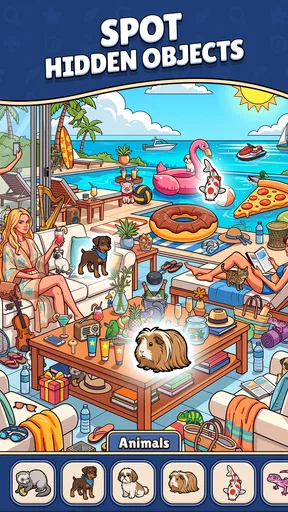
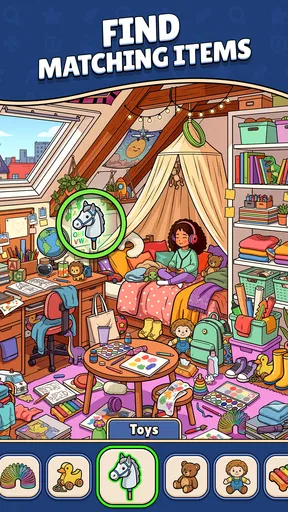
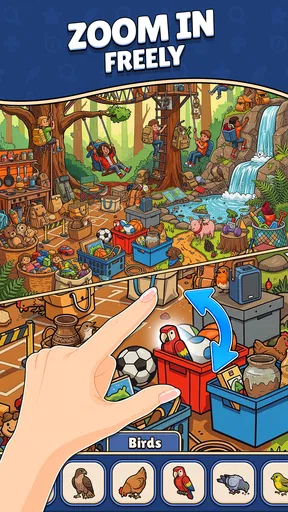
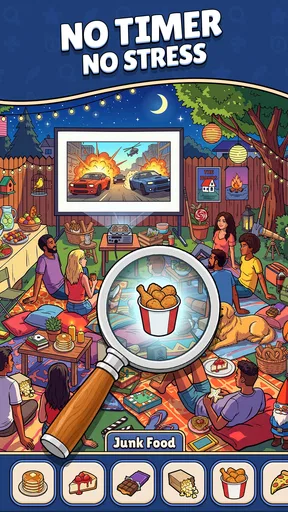
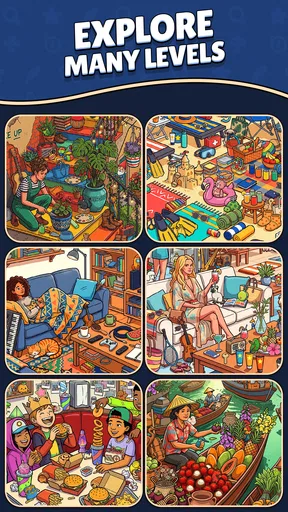
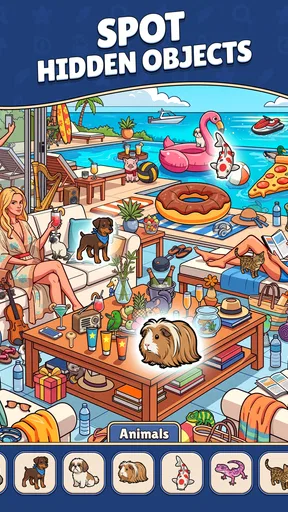
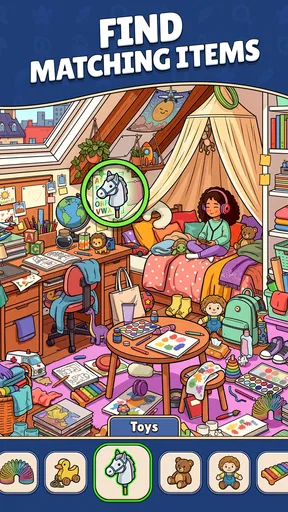
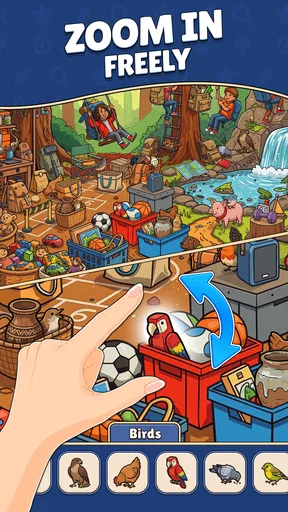
Our Review of Find Em All! - Hidden Objects
 Analysis by Appyee
Find Em All! - Hidden Objects is a free puzzle game from Agave Games built around one simple idea: look carefully, spot what is hidden, and keep going. I found the appeal easy to understand within a few minutes. It is the kind of game I can open when I want a quiet mental break rather than a complicated story, a competitive match, or a long tutorial. The store summary, “Find Every Hidden Object,” describes the central task accurately, while the shorter “Find Em All!” gives it a more casual feel.
What makes this worth discussing is not a complicated rule set, but how well a focused hidden-object format fits different moments in the day. I can imagine playing it while waiting for an appointment, taking a short break from work, or relaxing before bed. At the same time, this style is not for everyone. If you need constant action, deep progression, or a puzzle system that keeps changing its rules, the basic search format may feel limited.
How the free model affects the experience
The game is free to download, which makes it easy to try without committing money first. That matters for a puzzle title based on visual observation because the right question is personal: do you enjoy scanning a scene and noticing small details, or does that quickly become tiring? A free entry point lets you answer that through actual play rather than judging from a description alone.
There are in-app purchases priced at $8.99 per item. I would treat that as an important part of the decision, even though the initial access costs nothing. The sensible approach is to enjoy the free experience first and only consider a purchase if it solves a specific problem for you or adds value you genuinely want. I would not buy anything simply because the game presents an obstacle or because I felt rushed while searching.
That distinction is useful: free access is not the same as unlimited value. The game can be worth installing at no cost, while a paid item needs its own justification. Since each purchase has a relatively noticeable price for a casual puzzle, I would be more selective here than I would with a small one-time convenience purchase. Anyone sharing a device with children should also pay attention before allowing optional spending.
The age rating is Everyone, so the overall presentation is intended to be suitable for a broad audience. That makes the game a reasonable candidate for family-friendly casual play, although adults should still make their own decisions about purchases. The rating tells me about the intended audience, not whether every player will enjoy the pace or visual concentration required.
What the game gives you for the time you spend
The strongest value comes from its low barrier to entry. Hidden-object puzzles do not require a long explanation before the player understands the goal. I can pick it up after a break and remember what to do immediately: inspect the scene, compare shapes and colors, and search methodically instead of tapping randomly. That simplicity is useful when I want a game that respects short sessions.
I also like that this format can turn ordinary waiting time into something active without demanding full attention for a long stretch. For example, if I have ten minutes before leaving home, I can play a little, stop when I need to, and return later without needing to reconstruct a complicated strategy. That makes it more practical than a long-form puzzle adventure when my schedule is fragmented.
A less obvious benefit is that the game rewards a change in visual habits. When I first look at a busy scene, I tend to search for obvious objects. A better method is to divide the picture into sections, scan from left to right, and check edges, corners, repeated patterns, and areas where an object could blend into its surroundings. This approach makes the game feel less like frantic tapping and more like a small observation exercise.
I recommend using a consistent search routine rather than jumping around the screen. Start with large shapes, then look for color mismatches, unusual outlines, and objects partly hidden by similar textures. If you are playing on a phone, holding it at a comfortable distance helps prevent the experience from becoming a squinting contest. These habits are not advertised as features, but they make a real difference to how enjoyable the puzzle loop feels.
The game also suits different levels of involvement. I can play casually, accepting that a search may take time, or I can treat each scene as a concentration challenge and try to improve my visual discipline. That flexibility gives the free download more practical value than a title that only works when I have a long uninterrupted session.
Where the format can become frustrating
The same simplicity that makes the game approachable can also become its main weakness. Searching for hidden objects is satisfying when the scene feels readable and the target is discoverable. It becomes less satisfying when I feel that success depends on repeatedly sweeping the same area or tapping every suspicious detail. Without a change of pace, the loop may feel repetitive to players who want fresh mechanics.
Visual puzzle games can also be demanding in a very specific way. They are not physically intense, but they ask for sustained attention. After a long day, I may want something that helps me switch off completely; a hidden-object scene can instead make me concentrate harder. If your eyes are tired or you are playing on a small screen, the search may feel more like work than relaxation.
That is why I would avoid judging the game only by how attractive the idea sounds. The real test is whether you enjoy careful inspection. People who prefer logic grids, number puzzles, word games, or physics challenges may find a different type of puzzle more rewarding. Those alternatives usually give clearer rules and more direct feedback, while this game depends heavily on visual patience.
The purchase structure adds another trade-off. The game is free to start, but optional items cost $8.99 each. That can be fair when a player knowingly chooses extra value, yet it is not a detail I would ignore. For a casual title, repeated purchases could quickly cost more than expected. My advice is to decide on a personal spending limit before buying anything and to judge each item by lasting usefulness rather than momentary frustration.
Another practical issue is that hidden-object games are sensitive to screen size and visibility. A scene that feels comfortable on a larger phone may be harder to inspect on a smaller display. Bright surroundings, glare, or a low screen brightness can also make subtle details harder to notice. I get better results by playing in steady lighting, cleaning the screen, and taking a short pause when I start tapping without really looking.
Who is most likely to enjoy it
I think this is a good match for players who want a straightforward puzzle game with an immediate objective. It works especially well for people who enjoy visual details, seek short sessions, and do not need a large narrative reason to keep playing. The Everyone rating also makes it easier to consider for mixed-age households, provided adults remain aware of the optional purchases.
It may also suit someone trying to replace unstructured scrolling with a small activity. Instead of opening a social feed for a few minutes, I can use that time to focus on one scene and stop when I am finished. The benefit is modest but real: the game gives those spare minutes a clear beginning and end, which can be more satisfying than endlessly refreshing content.
Families could use it as a shared observation activity, with one person describing where to search and another checking the scene. That changes the experience from solitary play into a conversation about color, position, and visual clues. I would not present it as an educational tool, but it can encourage patient looking and cooperative attention in a relaxed setting.
It is less suitable for players who want a strong sense of character progression, competitive rankings, or elaborate strategy. It is also not my first recommendation for someone who becomes irritated by slow discovery. In those cases, a traditional logic puzzle or a faster arcade game would probably offer more satisfying feedback. Choosing the right alternative depends on whether you want to reason through a system or inspect an image for details.
Players who are sensitive to optional spending should approach it with a clear boundary. Because the game costs nothing to begin, there is little downside to trying it, but the presence of $8.99 items means the free experience and the paid experience should be considered separately. I would install it freely, test whether the basic search loop holds my attention, and only then think about purchases.
Practical ways to get more from each search
My first tip is to avoid random tapping. Divide the scene into a simple grid in your mind and clear one area at a time. This reduces duplicate searching and helps me remember which corners I have already checked. If an object seems impossible to find, I look for differences in texture rather than only differences in color; a hidden item may be easier to recognize by its outline or by an interruption in a repeated pattern.
My second tip is to change distance instead of staring harder. I sometimes hold the phone slightly farther away to see the whole composition, then bring it closer for a detailed scan. The wider view helps identify an object that breaks the scene’s overall balance, while the closer view helps confirm small shapes. This two-stage method is more comfortable than keeping the screen close to my face.
My third tip is to use the game as a deliberate short break, not as background activity. I get more enjoyment when I put away other distractions and give one scene my full attention for a limited period. If I am repeatedly missing obvious objects, that usually means I need a pause rather than another round of frantic tapping. Returning with fresh eyes can be more effective than forcing the search.
A fourth useful habit is to describe the target in neutral terms before searching: its likely shape, dominant color, and whether it might blend into the background. That prevents me from looking only for a perfect, isolated version of the object. It also makes cooperative play easier because another person can help search based on the description without simply pointing at random.
These methods reveal the main trade-off in the design. The game can sharpen attention to detail, but it asks the player to supply patience and structure. It does not replace a deep strategy game, and I would not expect it to. Its value is in making a small, focused visual task feel approachable enough to repeat.
How it compares with other puzzle choices
Compared with word puzzles, this game depends less on vocabulary and more on visual recognition. That makes it friendlier for players who do not want to solve clues or build words, but less appealing to anyone who enjoys language-based discovery. Compared with number puzzles, it offers a more relaxed relationship with correctness: the challenge is finding what is present, not calculating what must come next.
Compared with match-three games, it is usually a calmer kind of engagement. Match-three titles often emphasize quick decisions, combos, and a steady stream of movement. A hidden-object game instead rewards slowing down and noticing. If I want energy and rapid feedback, I would choose the former; if I want to settle into observation, this is the better fit.
Compared with larger adventure puzzle games, the appeal here is convenience. I do not need to remember a story, manage an inventory, or understand a chain of connected mechanics before playing. The compromise is depth. A bigger puzzle adventure may provide more memorable progression, while this game is better viewed as a collection of focused moments rather than a substantial journey.
That comparison also explains why the free model is important. A player looking for a major, long-term game should not assume that a simple hidden-object format will provide the same depth as a premium puzzle adventure. Someone seeking an accessible way to fill short breaks may find the free starting point much more attractive than paying upfront for a larger experience.
Device details and what to expect from the current release
Agave Games lists the current version as 1.0.7, and the game requires Android 10 or later. That requirement is worth checking before installing, especially if you use an older phone or keep a spare device for casual gaming. On a compatible Android device, the main consideration is not demanding controls but whether the display gives you enough room and clarity to inspect scenes comfortably.
The game has passed 100K installs and carries a 5.0 average from around 10K ratings, with 271 written reviews. Those figures suggest strong interest and very positive reception, but I still see them as a starting point rather than a substitute for personal testing. Hidden-object games are unusually dependent on individual tolerance for visual searching, so a high average cannot guarantee that the pace will suit everyone.
Because it is free, I would use the download as a low-risk trial. Give the basic loop enough time to determine whether finding objects feels rewarding or merely repetitive. If you enjoy the process, the game can become a handy short-session option. If you do not, there is no reason to force yourself toward a purchase just because the rating is impressive.
My recommendation after weighing the value
I recommend trying Find Em All! - Hidden Objects if you want an approachable visual puzzle that fits around everyday interruptions. The free starting point is its clearest advantage, and the Everyone rating broadens its appeal. I especially like it for quiet breaks, shared observation, and players who enjoy building a careful search pattern instead of reacting quickly.
I would skip it if your ideal puzzle game requires complex deduction, a rich story, or constant mechanical variety. I would also be cautious with the optional $8.99 items: they should be treated as deliberate extras, not automatic parts of the free experience. Install first, decide whether the search itself holds your attention, and keep spending separate from that initial judgment.
My final view is positive but specific. Find Em All! - Hidden Objects delivers its best value as a free, focused pastime, not as a replacement for a deep puzzle adventure. Agave Games has chosen a clear format that can work well in small doses, provided you enjoy visual patience. For the right player, it is an easy recommendation to try; for anyone who needs richer systems or faster action, another puzzle category will be a better use of time.
Verdict
Strengths of Find Em All! - Hidden Objects
- Simple controls make the game easy for children and casual players.
- Short levels are convenient for quick gaming sessions.
- Bright artwork makes hidden items easy to distinguish.
- Progressive challenges help maintain interest over time.
- Works well as a relaxing, low-pressure puzzle experience.
Limitations of Find Em All! - Hidden Objects
- Some levels may feel repetitive after extended play.
- Small objects can be difficult to spot on phone screens.
- Hints may reduce the challenge for experienced players.
- Ads can interrupt gameplay depending on the version.
- Limited gameplay variety may affect long-term replay value.
Other Releases by Agave Games
View All
Find The Cat - Spot It!
Puzzle4.9

Find The Cat 2 - Spot It!
Puzzle4.9

Word Tiles - Relaxing Puzzle
Puzzle4.9
Similar Picks in This Category
View All
Block Blast!
HungryStudio4.8

Braindom: Brain Games Test
Lahana Game Studio4.6

AMAZE!
CrazyLabs LTD4.6

Sudoku - Classic Sudoku Puzzle
Oakever Games4.7

Art Puzzle - Puzzle Games
Easybrain4.8

Amaze GO!
Oakever Games4.9
Frequently Asked Questions
What is Find Em All! - Hidden Objects?
Find Em All! - Hidden Objects is a casual puzzle game focused on spotting concealed items in detailed scenes. Each level asks you to carefully examine an image and locate the objects listed on the screen. It is designed for short play sessions, but the increasing difficulty can make later stages more challenging and rewarding for players who enjoy observation games.
How do you play Find Em All! - Hidden Objects?
To play, open a scene, review the target-object list, and tap the items as you discover them. Careful searching is important because objects may be partially hidden, blended into the background, or placed among visually similar details. Depending on the level, you may also need to work against a timer or avoid incorrect taps, so patience and attention are useful.
Is Find Em All! - Hidden Objects suitable for children?
The game is generally suitable for players who enjoy simple visual puzzles, including children who can comfortably read the instructions and identify the required objects. However, parents should still check the current content, advertising, and in-app purchase settings before handing over a device. Difficulty, time limits, and the amount of screen time should also be considered for younger players.
Can Find Em All! - Hidden Objects be played offline?
Some hidden-object games allow previously loaded levels to be played without an internet connection, but offline availability can depend on the version, device, advertisements, and how new content is delivered. For the most reliable experience, launch the game while connected at least once and test the levels you want to use offline. Internet access may still be required for updates or rewards.
Is Find Em All! - Hidden Objects free to download?
Find Em All! - Hidden Objects may be available as a free download, although the exact store listing, advertising model, and optional purchases can vary between Android and iOS versions or change after updates. Before installing, review the official store page for pricing, permissions, supported devices, and purchase details. If children use the app, enable purchase restrictions on the device.
Play our best games!


